Monday, October 15, 2012
Meal by Ordeal
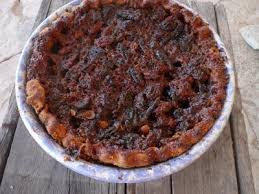
Thanksgiving for as far as I can remember has always taken place in my home. Every year the meal goes the same way. My mother tells my whole family that dinner will be served at 2 o'clock (how that is dinner I don't really know). She says this but never actually accounts for the fact that she never has finished a meal at that time. But this is not the ordeal. My aunt always feels the need to make a big dessert for the meal even though we tell everybody that we will take care of everything. But she insists and usually makes a pumpkin or apple pie. Now, why am I mentioning this? Whatever she makes is almost always very gross. We struggle to eat it but we are afraid to not eat it because we don't want to hurt her feelings and she always forces it on us. We even have to keep it at our house for the following days when it finally meets its final resting place in the garbage. Do we feel bad? Of course. But the food makes us feel just as bad.

Ordeal By Meal Blog Assignment - Will
 For Chinese people tradition means everything; however, for reasons unknown to me traditions for each family is different. For that matter traditions within families can vary, the real decider for traditions would be the elderly. My grandmother on my father's side controls the family tradition and the biggest one that comes to mine would be Chinese New Year. For other families Chinese New Year is celebrated with red envelopes and the feasting of traditional delicacies, but for my family its a little more than that. The big rule is that meat is not allowed on the day of Chinese New Year, this also includes fish so the only thing I'm allowed to eat on Chinese New Year is vegetables and fruits. Despite how grueling this might sound, its actually quite delicious although there is no meat. But since this tradition only applies to my family as far as I'm aware of, its very rude to eat meat since the thought process I believe is that one must remain pure on Chinese New Year and cleanses their body by forsaking meat for a single day. I've never eaten meat during Chinese New Year since that way of thought was beaten into me at a very young age, but I shudder to think what my family especially my grandmother would think of me if I failed to follow their expectations, after all its just one day without meat and I've already done it 19 times how hard can it be to follow for the rest of my life. Many of my Chinese friends find it extremely strange to spend Chinese New Year without any meat and even more wonder how I last the entire day without any meat but I tell them its for my grandmother.
-William Jim
Odyssey book 6 - Summary
Book 6
The epic takes up after Odysseus' escape from the sea and finally making landfall on the Phaiakian country. It starts with Athena going to the city of Phaiakian to devise the homecoming for Odysseus. Athena speaks to Nausikaa in her dream to tell her to go on a "washing" tomorrow since her marriage wasn't far off and the laundry needed to be done. Soon after Dawn cam and rose Nausikaa and she did as Athena told her to do and she convinced her parents to allow her to wash all their clothing by the river. Using this as a medium Athena would have Odysseus meet Nausikaa and her hand maidens.
Odysseus awoke to the sound of the girl's distress when they lost a ball during their game. Using a leaf branch to cover himself Odysseus makes his way to meet these girls. At this point he is compared to a hill-kept lion who has ventured down to hunt out of necessity, just as Odysseus must himself aware to the Phaiakians so that he may be able to go home. All the girls ran away except Nausikaa whose heart had been steeled with courage by Athena. She alone stood her ground against Odysseus, after that he may terrify the girl Odysseus stands away from Nausikaa and asks her for clothing and to show him the way to town. Nausikaa agrees to this much saying that all people's fates are given by Zeus whether they are good or bad men.Odysseus washes himself in the river and Nausikaa tells him the directions to town, as a precaution she told him that he should make his way well after Nausikaa has left so as to avoid suspicion since Nausikaa was supposed to be married soon. Nausikaa also tells Odysseus what to do once he enters the place and how he should present himself to the King and Queen.
Odysseus watches Nausikaa leave and once she was out of eyesight he makes his way to town, there Athena disguised as a maid shrouds Odysseus in mist so that he can approach the city stealthy since the Phaiakians were xenophobic.
-William Jim
The epic takes up after Odysseus' escape from the sea and finally making landfall on the Phaiakian country. It starts with Athena going to the city of Phaiakian to devise the homecoming for Odysseus. Athena speaks to Nausikaa in her dream to tell her to go on a "washing" tomorrow since her marriage wasn't far off and the laundry needed to be done. Soon after Dawn cam and rose Nausikaa and she did as Athena told her to do and she convinced her parents to allow her to wash all their clothing by the river. Using this as a medium Athena would have Odysseus meet Nausikaa and her hand maidens.
Odysseus awoke to the sound of the girl's distress when they lost a ball during their game. Using a leaf branch to cover himself Odysseus makes his way to meet these girls. At this point he is compared to a hill-kept lion who has ventured down to hunt out of necessity, just as Odysseus must himself aware to the Phaiakians so that he may be able to go home. All the girls ran away except Nausikaa whose heart had been steeled with courage by Athena. She alone stood her ground against Odysseus, after that he may terrify the girl Odysseus stands away from Nausikaa and asks her for clothing and to show him the way to town. Nausikaa agrees to this much saying that all people's fates are given by Zeus whether they are good or bad men.Odysseus washes himself in the river and Nausikaa tells him the directions to town, as a precaution she told him that he should make his way well after Nausikaa has left so as to avoid suspicion since Nausikaa was supposed to be married soon. Nausikaa also tells Odysseus what to do once he enters the place and how he should present himself to the King and Queen.
Odysseus watches Nausikaa leave and once she was out of eyesight he makes his way to town, there Athena disguised as a maid shrouds Odysseus in mist so that he can approach the city stealthy since the Phaiakians were xenophobic.
-William Jim
Sunday, October 14, 2012
Ordeal by Meal Blog Assignment
Every year it is family tradition to travel to Kitchener, Ontario and celebrate Oktoberfest. This event is a time for Germans to gather together and celebrate. During Oktoberfest we drink plenty of beer and eat good German food. One thing in particular that I enjoy eating is the apple smoked swine tail. The swine tail is a very popular food at Oktoberfest and is usually eaten by men because it looks disgusting. Despite its nasty appearance it tastes very delicious, similar to very soft and tender pork that has a slight apple taste. The swine tail goes really well with Lowenbrau which is also the main beer that we drink during Oktoberfest. Some of my freinds find it disgusting that I good eat a swine tail but it is a traditonal German food that is eaten during Oktoberfest. The reason there is a difference in how some people view eating swine tail is because some people in the US have not even heard of eating a swine tail. For example the idea of eating bugs might sound disgusting to most Americans but it is a common food in some Southeast Asian countries such as Vietnam. This is another instance where different cultures have different perceptions of what is considered to be food.

Satyricon

Oktoberfest

Ordeal by Meal by Elise Roy
Every year in January, my dance studio hosts a Robert Burns Night in order to raise money. Robbie Burns was a Scottish poet, and every year on his birthday Scottish people from all over celebrate by having a big dinner, reciting his poetry, playing the bagpipes, and having Scottish Highland dancers perform. Special Scottish dishes for the occasion include peas and carrots, neaps and tatties, whiskey, and the most important food of all, haggis. One of Robbie Burns's poems was titled "Ode to the Haggis" which is recited every year in his honor. The speaker drops into a deep old-timey Scottish accent, and proceeds to recite the poem while dicing up the meat in a dramatic and messy manner.
Not many Scottish people actually like haggis, but it's one of those dishes that you have to have present at an event like this. Essentially haggis is a boiled sheep stomach stuffed with diced up liver and kidneys (yum). I've asked my Scottish family about their opinion on haggis. My cousin loves it and heaps it onto her plate the moment she sees it. My aunt on the other hand hates it and questions why we have to eat it in the present day. Haggis to me tastes a bit like meatloaf. It's decent but should only be consumed in small quantities. It's good for celebrating on one special day of the year, but it's important to only have it on that one day.
Not many Scottish people actually like haggis, but it's one of those dishes that you have to have present at an event like this. Essentially haggis is a boiled sheep stomach stuffed with diced up liver and kidneys (yum). I've asked my Scottish family about their opinion on haggis. My cousin loves it and heaps it onto her plate the moment she sees it. My aunt on the other hand hates it and questions why we have to eat it in the present day. Haggis to me tastes a bit like meatloaf. It's decent but should only be consumed in small quantities. It's good for celebrating on one special day of the year, but it's important to only have it on that one day.
Latin American from the island to the mainland

I come from a family in which food does play a big role my mother which is eastern european jew and my father who is puerto rican , food plays a key role in culture . I have partaken in puerto rican family eaten that can have a pig roast in the backyard . The sizes of portions are always big and never ending, i thought this would prepare me for all kinds of eating within latin culture but i wasn't right at all. When i went to my girl friends home her parents prepared me a meal like i never had before. My girl friend is El Salvadorian , this is very different from Puerto Rican being it is a country in central America compared to an island like Puerto Rico. When engaging in breakfast I was given a plate of mashed beans , cheese and a food called pupusas . When i look around there was only spoons to take more cheese and to take more beans. I myself didn't have a fork or knife and then I observed how the food was eaten. It was as if the pupusas was used to pick up the beans and cheese , and my girl friends family made it look like it was easy to clean ur plate to a point that there was nothing on them. They we clean as if they were washed in a dash washer and then i looked at my plate still had marks and streaks on it. I in turn looked at my girl friend and she told me its not for everyone , it takes time to get used to how to do it. I then took it upon myself to make sure my plate was clean, her mother told me central american food especially Salvadorian food is very different from puerto rican but a sign of a clean plate is a sign of respect. She commended me for doing my best and said she was glad i enjoyed the food so much. I can say as of today I can eat pupusas with the best of them and I have come to love the culture and food of El Salvador . I am actually going their next summer and look forward to experiencing even more great meals .

Wednesday, October 10, 2012
5 Minute Summary - Odyssey 11, by Patricia Johnson
So, Book 11 begins on Circe's beach with Odysseus and his men putting their ship
in the water while crying about Elpenor.
Once everything is in order, they sail away from the island with the
help of some wind from Circe. They quickly reach
the river Oceanus and then the land of the Kimmerians, where they land to
follow Circe's instructions on contacting the dead, including digging a pit
that they fill with milk, honey, wine, water, barley, and the blood of some
sacrificial sheep.
As a result of so faithfully following Circe's instructions,
a horde of shades (ghosts) pop out of the ground. Odysseus is taken hold of by "the green
fear", but stands his ground and pulls his sword so that his ghost bait
isn't overrun before he can find out how to get home from Teiresias.
The first soul he speaks to is that of Elpenor, his
alcoholic buddy who fell of the roof.
Elpenor asks Odysseus to go back to Aiaia and bury him with his
oar. Odysseus cries and agrees.
He also cries when he
sees the ghost of his mother, who he didn't know had died while he was
away. He can't talk to her, though.
He then sees the blind prophet Teiresias, target of this
little mission, and lets him drink the blood. Teiresias can then speak to
Odysseus, and tells him not to let himself or his men touch Apollo's sheep and
cattle when they get to Thrinakia, or the men won't make it home. However, he then strongly suggests that the
men do mess with the livestock when he prophesizes that Odysseus will be the
only one to make it home, in someone else's ship. He also tells Odysseus that he will return to
Ithaka to find Penelope and Telemachus bombarded by suitors, that he will
violently punish the suitors, and that he will have to make another journey to
a place that has "men living who know nothing of the sea" in order to
sacrifice to Poseidon and guarantee for himself a long life and peaceful death.
Odysseus doesn't really react to hearing his life story, but
instead asks to talk to his mother.
Teiresias tells him to let her drink the blood, which he does. His mother then tells him that Penelope cries
and sleeps all the time, that Telemachus is all grown up but in need of help
with the suitors, that Laertes is so depressed about Odysseus that he lives in
a hut, and that she died out of grief for Odysseus.
While they were talking, Persephone sent ghosts of
"daughters and wives of heroes" to talk to Odysseus. He uses his sword to keep them in line and
lets them drink blood and talk to him one by one. He speaks to Tyro, Antiope, Alkmene, Megara, Epikaste, Chloris, Leda, Iphimedeia,
Phaidra, Prokris, Ariadne, Maira, Klymene, and Eriphyle.
He then pauses the story, saying that,
"there is a time for sleep," but Arete says that he should continue,
as well as that everyone should give him gifts.
The king claims the right, as the king, to give him the most gifts, and
says that sleep is for people who don't have fantastical stories to tell,
especially if they involve meeting the souls of the fallen heroes of Troy.
So, Odysseus continues his
story. The next soul he speaks to is
Agamemnon, who tells him about his murder and to never trust women. Except the lovely Penelope, of course.
Achilles, Patroclus, and Antilochus
then appear. Odysseus lusts after the
glory that is now Achilles', but the son of Peleus says he would rather be a
poor, living farmer than a powerful, dead lord of ghosts. This is an interesting throwback to Achilles'
choice of fate; he chose the early death and glory, but at one point in the
Iliad was contemplating the long life without kleos that he seems to be wishing
for now. Finally, Achilles asks about
his son, and Odysseus tells him that he was brave and left Troy unharmed.
Odysseus also sees the soul of
Telemonian Ajax hovering in left field, and pleads to talk with him, but Ajax
is still mad about the whole suicide thing.
Next, Odysseus looks into the depths
of the Underworld and sees an image of Hercules commiserating with him, Minos
judging souls, and Sysiphus,Tityos, and Tantalos suffering their
punishments. While he is distracted,
more shades swarm around the blood, and Odysseus gives into the "green
fear", runs back to the ship, and sails away.
 |
| A vase painting of Odysseus talking to the soul of the blind prophet Teiresias. |
On to Book 12.
Ordeal by Meal Blog Assignment (due 10/16)
Foodways define us-- nations, regions, families have their own preferred foods and social rituals that go with them. In the Odyssey, much of what Odysseus learns about the minds of men comes from his encounters with strangers over food. Telemachus reveals his maturity when he is embarrassed by the suitors' poor treatment of his guest, and when he is able to 'eat with the grown-ups', i.e., negotiate his way through adult conversation at the dining table. In some cultures, it is considered deeply insulting for a guest to leave anything on his plate; in others, an empty plate is a signal to the host that the guest is not satisfied. Dietary rules vary greatly according to nationality, region, and religion. Your assignment: describe a food-related incident in your own life in which food plays a meaningful role and has led you to some insight into another culture or person, or in which you feel others have judged you over food. Is there a Thanksgiving dish in your family that no one likes, but which has to be made every year? Have you embarrassed yourself in a foreign country by your reaction to foreign food? Or proven your savoir faire by taking strange foods in stride?
My brother showed signs of his future diplomatic skills early on in an ordeal by meal. When he was an exchange student at the University of Bologna, he made friends with a student from Sicily, who invited him to come home with him for Easter. There was an enormous Italian family gathered for an enormous Sicilian feast whose centerpiece was a lamb slaughtered for the occasion. When the meat course came in, my brother was ceremoniously presented with the greatest delicacy, as was appropriate for a family showing its respect for its foreign guest. To my brother's dismay, the greatest delicacy turned out to be the lamb's eyeballs, which were set in front of him with a flourish. The whole family watched in silence to see if he would respond properly. The pressure was intense. He knew he would not be able to eat the eyeballs, and that his hosts would be deeply insulted if he did not. He came up with the perfect solution-- he thanked them for the honor but said that the best of the feast should go to the person most deserving of respect (or as close as he could come to saying that in Italian) and with equal ceremony, he presented the dish to the oldest man in the room.
 |
| My brother now, exercising his diplomatic skills over food. |
Monday, October 8, 2012
Epithets
Perplexing Gillibrand- Even though her political party is the democrats, in the House she had more conservative and center-left policy ideologies.
Clinton the First- Hilary Clinton was the first former First Lady to run for public office and to serve in a president's cabinet.
Schumer the Actor- Always scheduling media appearances, he is the center of camera attention.
Quick sighted Cuomo- Would determine the position he would run for and the timing based on those candidates who would run against him, therefore ensuring himself a seat somewhere.
Katie Coley
Clinton the First- Hilary Clinton was the first former First Lady to run for public office and to serve in a president's cabinet.
Schumer the Actor- Always scheduling media appearances, he is the center of camera attention.
Quick sighted Cuomo- Would determine the position he would run for and the timing based on those candidates who would run against him, therefore ensuring himself a seat somewhere.
Katie Coley
Book 20 Summary
Book XX Summary:
· Zeus called together a meeting at which everyone was present except Oceanus. He called it because of his deep concern for all of the doomed warriors on both sides. Zeus made the announcement that all of the other gods could go down to the war and help whichever side they preferred but he would remain on Olympus.
· At first, Achaeans were winning since Achilles had rejoined the war and he was feared by all of the Trojans. When the gods came down, a ‘hatred arose with a vengeance’ and the war became more escalated.
· Gods started to fight against one another and leveled the sides. Detailed whose side all of the gods were on.
· Achilles had his eyes set on Hector once he started to fight and was after him above all others.
· Apollo held a group discussion with the Trojans about fighting Achilles. He rationalized that Trojans are Aphrodite’s children, Achilles’ mom is a lesser goddess, therefore Trojans should be able to fight and conquer Achilles easily. Trojans rallied together and took Apollo’s advice and set out for Achilles.
· Hera saw Trojans approach with Apollo and talked to other gods on Achaeans side about whether they should make Apollo turn back or just give Achilles more power. War continues on throughout the god’s council.
· Aeneas is fighting Achilles: Achilles came charging on like a lion before a fight. Achilles asks Aeneas why he is fighting him and what has been promised him for doing so. Achilles reminisces the day that he had defeated Aeneas when they were alone on Mount Ida and Aeneas fled to Lyrnesus which was later sacked by Achilles. Achilles mentions how Aeneas was saved then but will not be today.
· Aeneas is adamant that he will not be scared off by Achilles’ words. Aeneas goes on to talk about his lengthy lineage. They begin to fight and Achilles is starting to win when Poseidon, who was watching, took pity on Aeneas and saved him by whisking him off to the sidelines while putting a mist over Achilles’ eyes. Poseidon tells Aeneas to wait until Achilles has been killed to fight as no other Achaean will be able to kill him then.
· Hector announces to the Trojans that he plans to go fight Achilles. After, Apollo warns him not to face Achilles singly or else he will be killed for certain. Advises that Hector should wait until Achilles is in the middle of a fight to attack him.
· Achilles is killing many different people in all different ways. Achilles then kills Polydorus (youngest son of Priam) and when Hector sees his brother fall and die, he rushes off to fight Achilles disregarding Apollo’s warning. Athena protects Achilles in this fight while Apollo protects Hector and since both sides are evenly matched it is like a stale-mate.
· Achilles continues him rampage with killing many other people in various and often gruesome ways.
Katie Coley
· Zeus called together a meeting at which everyone was present except Oceanus. He called it because of his deep concern for all of the doomed warriors on both sides. Zeus made the announcement that all of the other gods could go down to the war and help whichever side they preferred but he would remain on Olympus.
· At first, Achaeans were winning since Achilles had rejoined the war and he was feared by all of the Trojans. When the gods came down, a ‘hatred arose with a vengeance’ and the war became more escalated.
· Gods started to fight against one another and leveled the sides. Detailed whose side all of the gods were on.
· Achilles had his eyes set on Hector once he started to fight and was after him above all others.
· Apollo held a group discussion with the Trojans about fighting Achilles. He rationalized that Trojans are Aphrodite’s children, Achilles’ mom is a lesser goddess, therefore Trojans should be able to fight and conquer Achilles easily. Trojans rallied together and took Apollo’s advice and set out for Achilles.
· Hera saw Trojans approach with Apollo and talked to other gods on Achaeans side about whether they should make Apollo turn back or just give Achilles more power. War continues on throughout the god’s council.
· Aeneas is fighting Achilles: Achilles came charging on like a lion before a fight. Achilles asks Aeneas why he is fighting him and what has been promised him for doing so. Achilles reminisces the day that he had defeated Aeneas when they were alone on Mount Ida and Aeneas fled to Lyrnesus which was later sacked by Achilles. Achilles mentions how Aeneas was saved then but will not be today.
· Aeneas is adamant that he will not be scared off by Achilles’ words. Aeneas goes on to talk about his lengthy lineage. They begin to fight and Achilles is starting to win when Poseidon, who was watching, took pity on Aeneas and saved him by whisking him off to the sidelines while putting a mist over Achilles’ eyes. Poseidon tells Aeneas to wait until Achilles has been killed to fight as no other Achaean will be able to kill him then.
· Hector announces to the Trojans that he plans to go fight Achilles. After, Apollo warns him not to face Achilles singly or else he will be killed for certain. Advises that Hector should wait until Achilles is in the middle of a fight to attack him.
· Achilles is killing many different people in all different ways. Achilles then kills Polydorus (youngest son of Priam) and when Hector sees his brother fall and die, he rushes off to fight Achilles disregarding Apollo’s warning. Athena protects Achilles in this fight while Apollo protects Hector and since both sides are evenly matched it is like a stale-mate.
· Achilles continues him rampage with killing many other people in various and often gruesome ways.
Katie Coley
Wednesday, September 26, 2012
Into the valley of Death - Anna
Both the Illiad and Into the Valley of Death give the reader some insight into wars happening far from the reader. For us the Illiad takes place in the far distant past, which joined with the fact that the language and style of writing is so different than what we are used to, can allow us to read the text without taking in what is actually happening. If we take the time to really read it, the text tells us, often in R rated detail, about the grusome deaths of men. And not just about their deaths, but we are frequently given their lineage, hometown. etc. While it can be dull as modern readers, the poem makes it clear that these are individuals. We see some of their friendships and camaraderie in groups such as The Ajaxes and Gloucos and Sarpeidon. They are men with homes and families who should not be forgotten because their fight was far from their homes.
Into the Valley of Death gives us a chance to look at the lives of some of our own soldiers. The fact that they fight so far from home and we hear little of their day to day lives makes it easier to think about "the war" and "the army" in very general terms. This article gave us an up close view of these men's lives. It gave us their names and their faces. It makes the point that the war in Afghanistan is not a general happening, but that it a daily struggle for individuals who deserve to be known in the same way the soldiers in the Illiad did.
These texts give us not just some broad experiences, which both stories certainly offer, but they personalize the wars. They bring home the idea that these are not just faceless ideas, wars, but they were and are fought by individuals bound into tight knit groups.
Comment: Anna makes some excellent points-- the shockingly gruesome nature of the deaths in the Iliad, which it is easy for us to ignore because of the distance created by the print medium and archaic language, and the way the Iliad tries to individualize them and commemorate them so that their lives are honored, not wasted. The photos in Junger's reporting operate much like the mini-biographies Homer provides for the many fighters who are introduced only at the moment of death.
Into the Valley of Death gives us a chance to look at the lives of some of our own soldiers. The fact that they fight so far from home and we hear little of their day to day lives makes it easier to think about "the war" and "the army" in very general terms. This article gave us an up close view of these men's lives. It gave us their names and their faces. It makes the point that the war in Afghanistan is not a general happening, but that it a daily struggle for individuals who deserve to be known in the same way the soldiers in the Illiad did.
These texts give us not just some broad experiences, which both stories certainly offer, but they personalize the wars. They bring home the idea that these are not just faceless ideas, wars, but they were and are fought by individuals bound into tight knit groups.
Comment: Anna makes some excellent points-- the shockingly gruesome nature of the deaths in the Iliad, which it is easy for us to ignore because of the distance created by the print medium and archaic language, and the way the Iliad tries to individualize them and commemorate them so that their lives are honored, not wasted. The photos in Junger's reporting operate much like the mini-biographies Homer provides for the many fighters who are introduced only at the moment of death.
Tuesday, September 25, 2012
Into The Valley - Eric
 |
| Depiction of the Trojan War |
Comment: I agree with some of what Eric says, and not with other parts, so this is a good, thought-provoking entry. The boredom of the troops, the distance from home and families, the glorification of the 'beautiful death' of the fighting men, the concern for the bodies of the dead do seem strikingly parallel. However, the reasons why the Greeks fight vs. the reasons of al-Qaeda for attacking the US seem remarkably different, as does the mode of warfare. What do people think? Would Achilles or Sarpedon carry out a sneak attack on civilians?
Into the Valley of Death, by Patricia Johnson
The word "war" has had negative connotations for centuries. In almost every person from every culture, it conjures up images of dead bodies and blood, feelings of fear, anger, and pain. Junger's article gives readers a personal spin on these universal responses to war. The soldiers he interviewed and filmed told him their stories, displayed to him their terror and their fatigue, and allowed him to film the chaos of battle. The details that he documents give readers a tiny window into what it must be like to sweat, cry, and bleed for one's country, without assurance of a homecoming. Homer, in the Iliad, accomplishes a similar feat. His intricate descriptions of each warrior's death or victory, along with descriptions of their weapons and armor (this also parallels Junger; starting on the first page, we learn about the soldiers' heavy body armor and machine guns) make the listeners feel as if they are standing next to, or possibly within the warrior as his liver is ripped out by a Trojan's spear, or as he slashes his sword across an Achean's throat. In both the article and the epic, the extraordinary detail, given without holding back any gory description or uncomfortable reality, illuminate the horrors of war for those who may never have experienced them.
It is true that the type of warfare differs between Afghanistan and Troy. The Trojans and Acheans had to rely on their own personal strength and weapons and face each opponent individually. This made both their fear and their warrior pride rise and fall in sharp, contrasting dips. The Americans in Afghanistan, however, have machine guns, mines, planes, and helicopters than can kill many without the operator of the weapon ever having to personally face his victims. I am not saying that this makes them less of a warrior than the ancients, simply different. They also must compensate for their advantage over the ancients with their constant fatigue and disillusionment with their commanders' goals (as opposed to each ancient fighting for his own glory) that the ancients do not seem to deal with (as often). Even through the differences in technology, values, and methods, the details of grief and remembrance over fallen comrades, the self-endangerment for another warrior's body, and the disgust and horror over bloody details rings the same through the ages and through both piece's words.
It is true that the type of warfare differs between Afghanistan and Troy. The Trojans and Acheans had to rely on their own personal strength and weapons and face each opponent individually. This made both their fear and their warrior pride rise and fall in sharp, contrasting dips. The Americans in Afghanistan, however, have machine guns, mines, planes, and helicopters than can kill many without the operator of the weapon ever having to personally face his victims. I am not saying that this makes them less of a warrior than the ancients, simply different. They also must compensate for their advantage over the ancients with their constant fatigue and disillusionment with their commanders' goals (as opposed to each ancient fighting for his own glory) that the ancients do not seem to deal with (as often). Even through the differences in technology, values, and methods, the details of grief and remembrance over fallen comrades, the self-endangerment for another warrior's body, and the disgust and horror over bloody details rings the same through the ages and through both piece's words.
 |
| They are so similar... |
 |
| ...it is difficult to claim progress. |
Into the Valley of Death-Scott Weglarski
The Trojan war from the Iliad seems eerily similar to the account to the battles in Afghanistan. To me, the Afghan people seem more like the soldiers from the Iliad, taunting the American soldiers and fighting like everything they have could (and will) be lost. The stone houses they mentioned also stuck out to me as being familiar from the Iliad. The wall around Troy withstands any and all of the Greek's attacks, no matter what they throw at it. Another similarity I found between these two accounts of war are the reasons for the fighting. In the Iliad, it's a "noble rescue of Helen" by Menelaus and his brother Agamemnon. An underlying and more important reason for the cause of the war is simply pure greed. Troy is a rich city; I want it. The same goes for the Americans in Afghanistan. It's a good cause to protect foreign nations from the threat of dictatorship and terrorist organizations, but is it really the whole reason why we're there? And is it really worth starting a full scale war over? Soldiers like the ones mentioned in the article have seen and experienced the horrors of war because of this conflict with Afghanistan. Even if they came back relatively unscathed physically, how could you possibly hope to help the mental trauma caused by the war? Greeks and Trojans alike have watched their friends die around them, horrible, gruesome deaths. They fight over the bodies of the fallen. One part in the article I also found quite like this was the portion where a soldier named Miguel Gutierrez was apparently hit, and the American soldiers went into a frenzy of activity to save him. He ended up just breaking a leg from a fall, but I think it's the thought that counts.
Into the Valley of Death Andrew Schultz
I am amazed by both Homer's The Iliad and Junger's Into the Valley of Death as descriptions of war in both modern and ancient times. There are plenty of similarities that can be found in both depictions. The amount of detail used is one of them. The imagery that both of these include is nothing short of astounding. While reading both of them I could easily paint a picture in my mind about what is happening. Both Homer and Junger use an excellent array of sensory diction to show how gruesome war is through descriptions of fighting and death. In both works the authors show how soldiers take care of each other and the wounded. Soldiers take a huge interest in protecting their men and the bodies of the dead. Junger and Homer also were great at displaying the fear of the soldiers in both situations. The Americans were afraid of being attacked daily in one of the most dangerous places on Earth. Homer shows how both the Greeks and Trojans were fearful that they would be slain by the other side. Both authors truly depict an extremely frightening scene in both works.
I feel that these articles are also very different in how they are written. Although both illustrate a disgusting and scary war, it is hard to tell if one is more frightening than the other. Homer is able to portray the deaths of others with extreme detail in how soldiers were mutilated with arrows, spears, and swords. Junger shows the huge numbers of soldiers that get mowed down with machine guns in his article. It is frightening in both cases but it is interesting how each author makes the point. This is a very morbid point I am about to make in my opinion but it is the only way I can think of to say it. Homer shows death through quality while Junger shows the huge quantity of deaths that machine guns cause. Both are extremely hair raising in how they show the deaths of soldiers but in my opinion Junger does a better job establishing the fear of the soldiers. I feel afraid just reading the article. This might have to do with the fact that I am an American but either way Junger did a great job enforcing the idea that war is a truly terrible scene.
I feel that these articles are also very different in how they are written. Although both illustrate a disgusting and scary war, it is hard to tell if one is more frightening than the other. Homer is able to portray the deaths of others with extreme detail in how soldiers were mutilated with arrows, spears, and swords. Junger shows the huge numbers of soldiers that get mowed down with machine guns in his article. It is frightening in both cases but it is interesting how each author makes the point. This is a very morbid point I am about to make in my opinion but it is the only way I can think of to say it. Homer shows death through quality while Junger shows the huge quantity of deaths that machine guns cause. Both are extremely hair raising in how they show the deaths of soldiers but in my opinion Junger does a better job establishing the fear of the soldiers. I feel afraid just reading the article. This might have to do with the fact that I am an American but either way Junger did a great job enforcing the idea that war is a truly terrible scene.
Monday, September 24, 2012
Restrepo- Max Simon
Woah. After finishing the movie, "Restrepo," one can only imagine the turmoil those soldiers went through. Having to go through at least 15 months of constantly combatting for your life, and those of your peers. Although the movie is blatantly different than the Iliad in its sole representation of one side- versus showing the Taliban fighters viewpoints as well- it also differs in the soldier's reasons for fighting. While Greek soldiers fight for kleos and arete, the American troops fight more for freedom of the people against those that wish to conquer them.
Junger's portrayal of the war over the Korengal Valley mimics Homer's beginning of the Iliad by starting in media res. Although the film does document the beginning of the troop's deployment, it, like the Iliad, misses the start of the war and most of the fighting as the filming was in 2007. The soldiers join knowing that "death is a possibility" and to live through it, in their minds, is enough kleos for them. Obviously being able to defeat the enemy helps bring oneself kleos, but when you're using guns and bombs which can kill you at any minute, versus swords and spears which most of the time you can see before it kills you, surviving is kleos and time in itself.
After naming the new outpost after Restrepo, the infantry gave him permanent kleos and fought for his OP which I believe can represent his body and armor. Just as the Trojans and Greeks fight to protect their own's armor and body, which many other deaths have resulted from.

Junger's portrayal of the war over the Korengal Valley mimics Homer's beginning of the Iliad by starting in media res. Although the film does document the beginning of the troop's deployment, it, like the Iliad, misses the start of the war and most of the fighting as the filming was in 2007. The soldiers join knowing that "death is a possibility" and to live through it, in their minds, is enough kleos for them. Obviously being able to defeat the enemy helps bring oneself kleos, but when you're using guns and bombs which can kill you at any minute, versus swords and spears which most of the time you can see before it kills you, surviving is kleos and time in itself.
After naming the new outpost after Restrepo, the infantry gave him permanent kleos and fought for his OP which I believe can represent his body and armor. Just as the Trojans and Greeks fight to protect their own's armor and body, which many other deaths have resulted from.

Into the Valley of Death - Frank Genovese
 |
| The hands-on approach to mass murder. |
 |
| Imagine what something like this could do to a large crowd. All without ever having to look a single person in the eye. |
Valley of the Shadow of Death by Elise Roy
Homer's Iliad and Junger's Valley of the Shadow of Death are both poignant accounts of war. One thing that struck me about both stories was the description of the psychological impact of battle. There are descriptions of gruesome deaths and injuries, more in the Iliad than the Valley of the Shadow of Death. Like the constant descriptions of blood pooling and dogs eating dead bodies. But war wound descriptions are still present in both. There is the same concern and horror with the soldiers for the wounded in the Iliad as there is with the American troops. It shows the fear for the other soldiers; in the Iliad with Patroclus fighting in order to save the men's lives and in Junger's work with Guttie's fall and the fear that he would die. Another thing that is showcased very clearly in both texts is the fear environment that is all around them. The American soldiers are attacked every day, and there is always the fear that they will be breached and anhilated. The same is in the Iliad; the Greek soldiers are terrified that the Trojans will eventually breach their camps and they will all be destroyed.
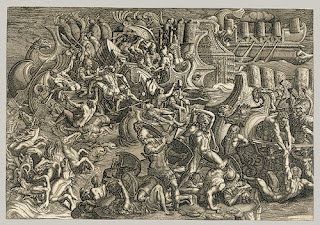
In my opinion, however, I think Junger's work shows more terror and far less glorification of war than the Iliad. The American soldiers don't look for glory when they decide to join the army like many of the Greeks do. There are no trophies of war, or ceremonial celebrations of victory in Afghanistan. however, the Iliad is not completely pro war. Though there is certainly a hunt for glory that is no longer current in today's world, Homer makes sure to show us the glory and the horror of war in his various praising epithets and his depressing descriptions of death.

In my opinion, however, I think Junger's work shows more terror and far less glorification of war than the Iliad. The American soldiers don't look for glory when they decide to join the army like many of the Greeks do. There are no trophies of war, or ceremonial celebrations of victory in Afghanistan. however, the Iliad is not completely pro war. Though there is certainly a hunt for glory that is no longer current in today's world, Homer makes sure to show us the glory and the horror of war in his various praising epithets and his depressing descriptions of death.
Into the Valley of Death- Alex Fultz

In the way they
describe the conflicts, however, Junger and Homer differ greatly. This largely
reflects cultural differences in values. Junger describes the battlefield in an
extremely eerie manor. The way he portrays the events in Afghanistan shows that,
even though they continued to crack jokes and attempted to maintain a positive
environment, the United States soldiers were only there for the sake of their
country. They by no means wanted to be there, and they were not doing it for
their own person glory or kleos. If a
soldier dies, they are honored, however death on the battlefield is not
glorified the way it was in ancient Greek culture.

The way Homer presents the Trojan War in the Iliad differs from this. Dying a
glorious death on the battlefield was almost considered the norm. The ultimatum
that Achilles is given regarding his life is a perfect example of this. He has
the choice of either staying out of the Trojan War completely and living a
long, normal,” gloryless” life, or he could participate in the Trojan War and receive
his glorious kleos and end up dying. The
way that Junger describes the events in Afghanistan, it is fairly obvious that
if those troops did not have such a strong will to fight for their country and
they were given the same choice, they would choose to live a long life with
their families. They would not really have to ponder it at great lengths as
Achilles did. My point is not that the Greeks were selfish or that they were a
barbaric people obsessed with war, but rather that the value systems of the two
cultures, when it comes to war, differ in several respects. This is evident
through the overall tones of both Homer’s Iliad
and Junger’s Into a Valley of Death.

Into the Valley of Death - Rich Brooks
Junger's article Into the Valley of Death and Homer's Illiad are both very vivid and realistic depictions of war. One thing that is clear in both the accounts is the very young age of the combatants. Junger mentions one soldier being killed at the age of 19 and that a man of 27 years is considered "old" in the army. While Hector never gives us explicit ages for the characters in the Illiad, it is reasonable to assume that they were also very young. Achilles and Patroclus were described as children playing in Peleus' halls when the war started. Achilles was even still growing a sacred lock of hair that is supposed to be cut off once on reaches manhood. Also, it is probably safe to assume that Hector is not much older than Achilles if older at all. In ancient Greece people married and had children much earlier in life than we do today, and Hector's child was just an infant during the story. Also displayed in both accounts is the camaraderie between soldiers. Countless times during the Illiad one soldier fought over the body of a fallen ally. Likewise, in Junger's tale, one man gave his life preventing the Taliban from dragging off the one of his wounded comrade's body. The constant stream of battle was also depicted in both cases. The Americans stationed at Restrepo encountered firefights several times a day. Whenever they weren't under fire they were doing some sort of manual labor. Similarly, In the Illiad there were several attacks and counterattacks all day every day. Fighting was nearly constant throughout the book. Like the American soldiers, the Greeks and Trojans typical day consisted of fighting, eating, and sleeping. Once during the book we even saw manual labor thrown into the mix, when the Greeks had to build fortifications to protect their ships after a day's worth of battle.
Subscribe to:
Posts (Atom)